
PROJECT GUIDES
Wooden Planter Box Guide
Plan a wooden planter around plant roots, wet soil weight, drainage, and your outdoor space.
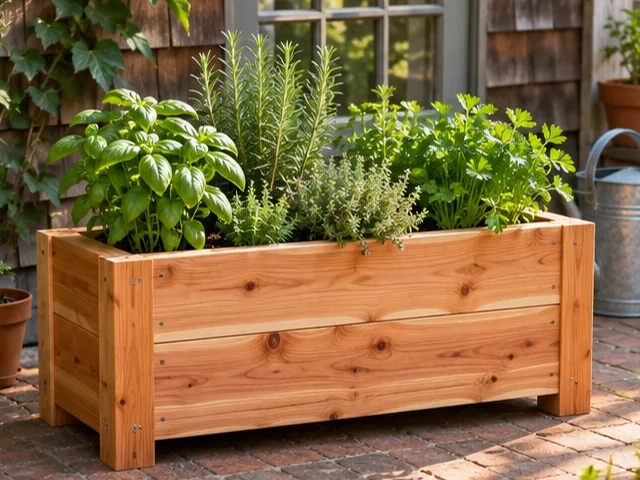
Decide what you want to grow before you settle on a planter box. A decorative sleeve around removable nursery pots and a box that directly holds wet soil may look similar outside. Inside, their drainage, floor support, and maintenance needs are different.
Start with the planting layout
Check root depth and mature spacing for the plants you want. For a slip-in container, measure the widest outside points, rim, and saucer. Leave enough access to lift the container out when it is wet. Mark usable interior dimensions separately from the outside footprint.
Plan where water will go
Choose a design that lets water drain freely without pooling against the lumber or the building. If you use a liner, verify that it fits the planting use and leaves a drainage path. On a deck or balcony, confirm load limits and runoff rules before filling. Water, soil, and containers add weight together.
Design for servicing the box
Look for a plan that explains how the bottom transfers its load to the sides or supports. Consider replaceable feet or an insert you can lift out for cleaning. Ask the wood and finish suppliers whether their products suit your intended exposure and plant use, particularly for edible plants.
Dry-fit before filling
Check that the empty box sits level and that the insert can still move past any protruding screws. Follow the verified plan and your tools' manuals throughout assembly. Test drainage with water before planting. Each season, check the base, liner, and fasteners where moisture tends to collect.
Common questions
Do I need a fixed set of dimensions?
Choose a plant or insert first, then verify a plan with explicit interior dimensions, bottom support, and drainage details.
Should a planter sit directly on a patio?
A design with air and drainage below the box can make cleaning and inspection easier. The support must carry the filled weight.