
LEARN WOODWORKING
Selecting Woodworking Materials
Compare solid lumber and sheet goods by exposure, actual dimensions, stability, finishing, and available tools.
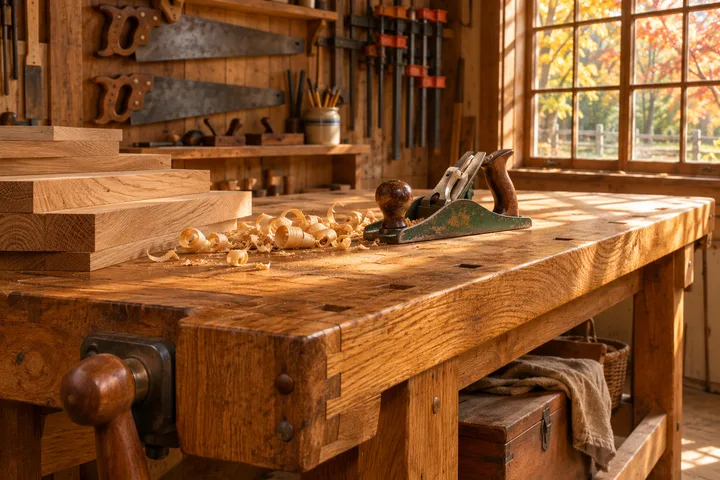
Start at the finished project and work backward. A planter gets wet from both sides, a workbench takes repeated wear, and a shelf may show every edge. Write down where the material will live, how it will be fastened, and which surfaces will be visible.
Match stock to the job
Compare solid wood, plywood, and other sheet goods by the plan's structural and exposure requirements. Verify the grade and treatment with the supplier. Reach for a suitable material substitution only after checking the change against joint and fastening details.
Inspect boards before buying
Check for twist, cup, bow, splits, and damage where a joint would land. Measure actual thickness and width. Lay out longer parts first and allow extra material for defects, trials, and trimming.
Plan for movement and finish
Seasonal moisture changes can affect solid wood across the grain. Verify how your plan handles wide panels. Try finish and hardware on a scrap from the same stock and follow the manufacturer's instructions for preparation and use.
Common questions
Can I change the wood species?
Check the verified design for strength, stability, durability, and fastener requirements before changing its materials.